Local specialties
Anmochi Zoni
- 37Kagawa
Your tasting map
- 37Kagawa
Dish log
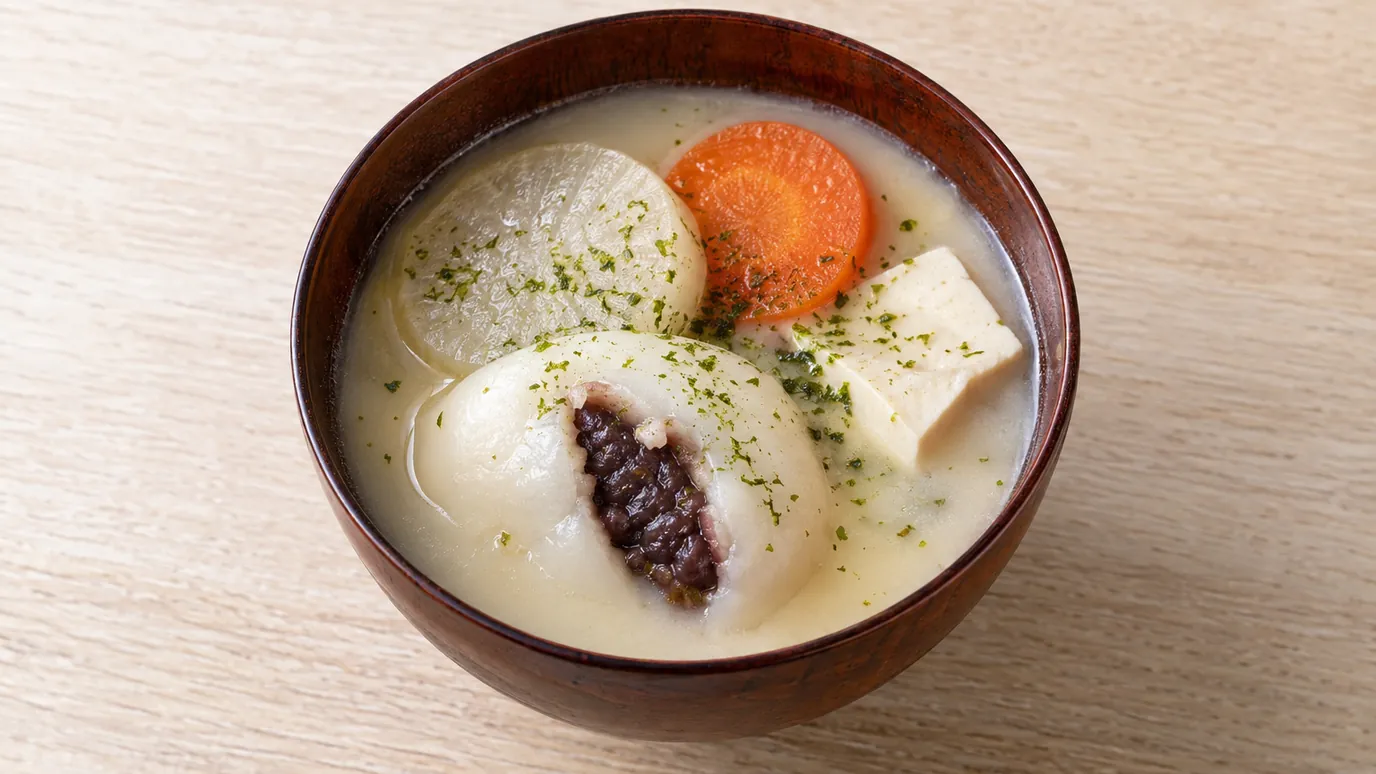
A Kagawa New Year zoni in a white miso broth containing round mochi filled with sweet bean paste, rounds of daikon, and other ingredients.
Dish profile
About this dish
- Main ingredients
- round mochi filled with sweet bean paste, white miso, daikon, kintoki carrot, tofu, niboshi (dried sardine) dashi, aonori (green laver)
- History and origin
- In Edo-period Kagawa, sugarcane cultivation was encouraged, and white sugar became one of the "Sanuki Sanpaku" (Three Whites of Sanuki) along with cotton and salt. The dish is said to have begun when, from around the Meiji period, it was adopted into zoni as a special New Year dish using precious sugar, and the white miso is said to have been brought by people who traveled from Kyoto to visit the Retired Emperor Sutoku, who had been exiled to Sanuki.
- When it is eaten
- It is eaten in each household at New Year along with osechi, and it remains a New Year staple today, with regional and family flavors passed down.
- How it is eaten
- Daikon, kintoki carrot, anmochi, and tofu are simmered in niboshi dashi, and white miso is dissolved in. To keep the mochi from sticking, daikon is laid on the bottom of the bowl with the anmochi on top, and aonori is sprinkled over last before eating.
Sources
- あんもち雑煮 香川県 | うちの郷土料理:農林水産省 · Ministry of Agriculture · Source checked 2026-10-12
Recipes vary by region and household. This is not ingredient, allergy, or dietary guidance for a specific restaurant.
Dietary guidance
Check before choosing this dish
These are clues found in the dish name and editorial description only. They do not confirm ingredients, shared equipment, or a venue's accommodation. Ask staff before ordering.
- VegetarianNo direct clue found (this does not mean suitable)
Shows possible meat or seafood clues in the dish information.
- HalalNo direct clue found (this does not mean suitable)
Shows pork or alcohol clues that need confirmation.
- Gluten-freeNo direct clue found (this does not mean suitable)
Shows clues that wheat may be present.
Religious and cultural checks
Shows whether pork or alcohol (mirin or sake) appears in the dish name or editorial description. No clue does not confirm absence or religious suitability.
- PorkPork: no direct clue found (absence is not confirmed)
- Alcohol (mirin / sake)Alcohol (mirin / sake): no direct clue found (absence is not confirmed)
Family travel check
Checks before sharing with children
Only clues from the reviewed food tags are shown. This is not a child-safety, suitability, or venue rating.
- SpicinessNot confirmed by the dish information.
Confirm before sharing when the dish has a reviewed spicy-food tag.
- Ease of eatingNot confirmed by the dish information.
Texture, bones, portion size, and allergens cannot be judged from this catalog alone.
- Venue settingNot confirmed by the dish information.
Seating, child facilities, and crowding are not included in the food record.
Community photos
Share a photo of this dish
Photos are kept private until an editor confirms that they show the dish and are suitable for publication.
Sign in Sign in to submit a dish photo.
Community editing
Suggest a correction
Send a correction or update with a source. An editor reviews every proposal before it appears in the catalog.
Sign in Sign in to suggest a correction to dish information.
A traveler's note
What people thought of this dish
Short notes instead of star ratings. Names and email addresses are never shown. A note does not verify ingredients or current availability.
No notes yet.
Sign in Sign in to leave a note.
A community signal
How local does this dish feel?
A self-reported estimate of everyday familiarity. It does not verify where anyone lives or guarantee that a business serves the dish.
Local familiarity estimate
No self-reported responses yet.
Sign in Sign in to add one anonymous response.
Plan beyond the page
Find ways to eat, stay, and explore
These are neutral Google searches using the catalog name and place. Aji Atlas does not guarantee a listing, price, stock, booking, or partnership.
Check before you go
Find current visit details
These neutral searches help you check venue-specific hours, crowd clues, access, and takeout information. Aji Atlas does not verify or guarantee the results.